Typhoon Tino’s Aftermath in Bacolod and Central Negros vs. NEPC Response
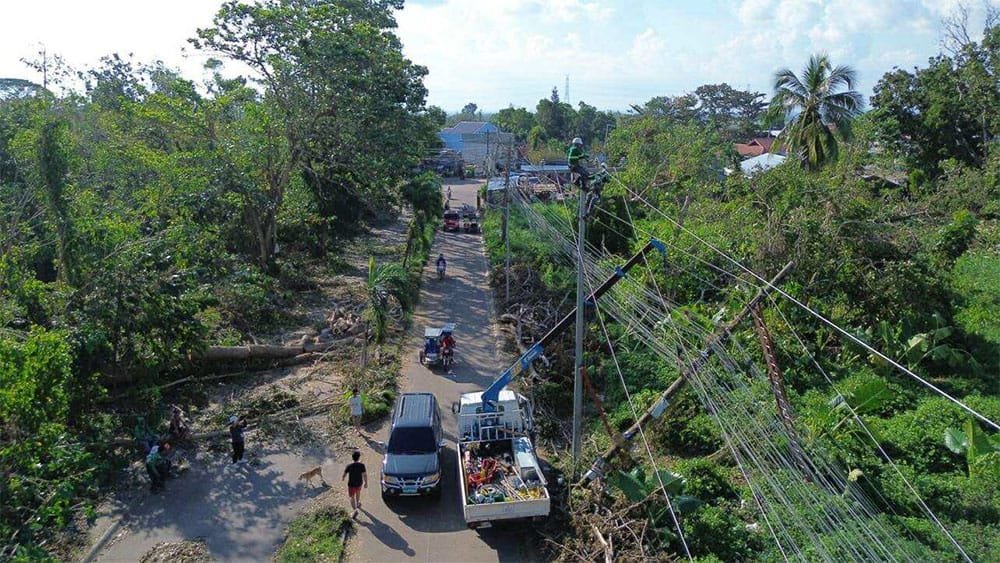
The aftermath of Typhoon Tino showed us how Negros Power has worked to restore power in Central Negros swiftly despite the damage.
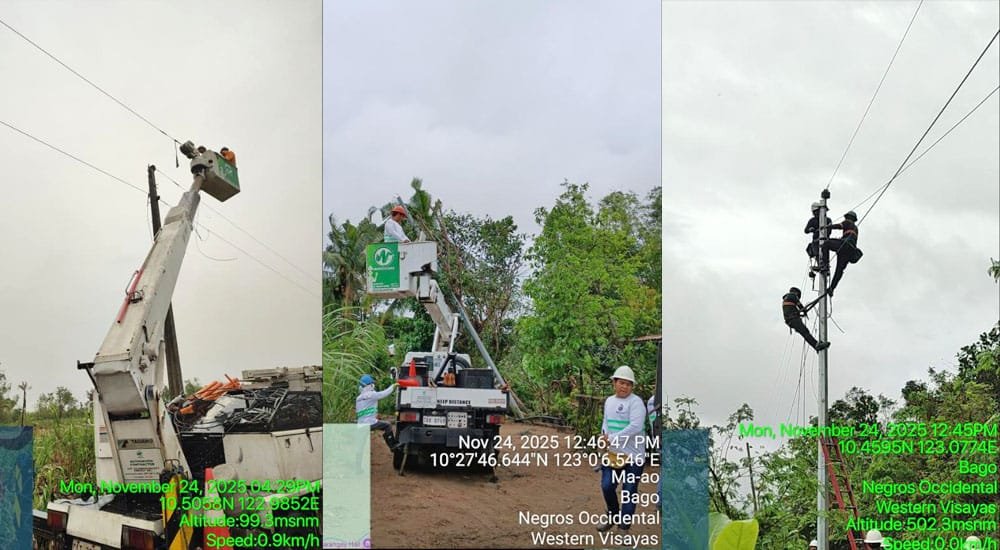
The aftermath of Typhoon Tino showed us how Negros Power has worked to restore power in Central Negros swiftly despite the damage.
Typhoon Tino is one of the strongest storms to ever lash out at Negros Island, with gusts reaching 220 kph under Signal No. 4. In its aftermath, many of us were reminded of the island’s vulnerability. Even decades-old trees that withstood the fury of Typhoon Odette in December 2021 finally gave way. Power substations went offline, and hundreds of poles and power lines were down. The destruction was widespread and massive. Even familiar.
Read: Power Restoration Process After a Typhoon
What Happened After Typhoon Tino
But this time, the response wasn’t familiar.
Reading reports of communities slowly coming back to life with lights turning on, small businesses reopening, families finally breathing easier—I couldn’t help but ask myself: What if CENECO was still our power provider today?
A quick look at CENECO’s own archived posts provides the sobering comparison. After Odette, it took more than a month to restore power fully—even with augmentation teams from various electric cooperatives, MORE Power, and Task Force Kapatid. The waiting felt endless. Households endured long nights, and businesses suffered immensely.
This time, the story is different.
Under Negros Power, almost 95% of consumers were re-energized in just two weeks, with full restoration expected within days. Thousands of households regained electricity within the first week—a feat almost unthinkable under the old system.
This wasn’t luck. It wasn’t mere circumstance. It was preparation, investment, and competence working hand in hand.
Negros Power’s rapid restoration was driven by:
- A strategic, proactive restoration plan that was activated even before Tino arrived.
- Augmentation teams from sister companies in Iloilo, Bohol, and a private utility in Cagayan moved swiftly and decisively.
- Pre-positioned equipment and supplies—something our communities had rarely experienced before;
- Collaboration with LGUs, volunteers, and partner utilities enabled quick clearing of trees, debris, and fallen structures.
This is what a modern utility looks like, as promised to the consumers—and this is what they are finally experiencing. However, let’s also remember that the commitment was a 5-year modernization plan. Negros Power is still in its first year, but it has already dealt with many natural occurrences, which they handled with utmost care and consideration for its consumers.
The Privatization Move
The decision to privatize the Central Negros distribution utility, once heavily debated, now stands justified. Not because the storm was kind, but because the response to a Signal No. 4 typhoon was competent, efficient, and professional. This is the kind of service that Central Negros has long deserved. There may be lapses, especially in answering calls and messages from thousands of irate consumers, but the ground crew never stopped working towards restoration.
This is only the first year of Negros Power’s five-year rehabilitation. Imagine what year five will look like. Consumers can expect:
- A more robust grid.
- Modernized facilities.
- Systems built to withstand typhoons even stronger than Tino.
- Restoration times reduced from weeks to mere days.
Time will tell. The dream of a resilient, reliable power system for Central Negros will not just remain a dream. It will become our everyday reality.
They proved it in Iloilo with MORE Power, and now, they are working to prove their capabilities in Bacolod City and Central Negros.