Negros Power Announces Significant Rate Reduction for February 2026
NEPC Consumers with an average monthly consumption of 200 kWh will save 322 pesos of their budget for February 2026.
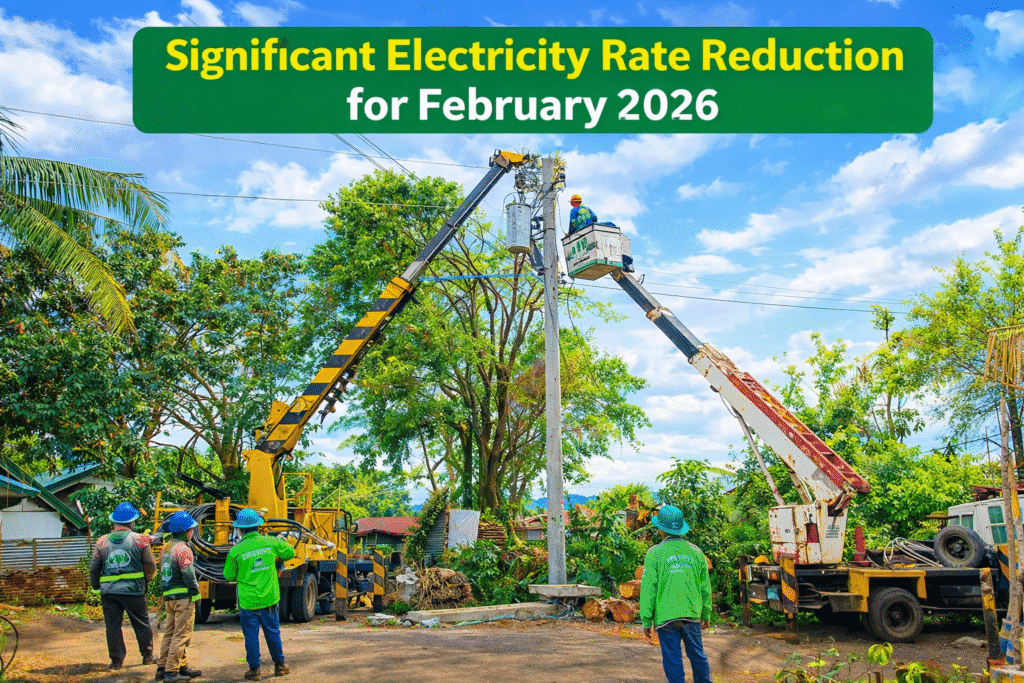
Negros Power Consumers with an average monthly consumption of 200 kWh will save 322 pesos of their budget for February 2026.
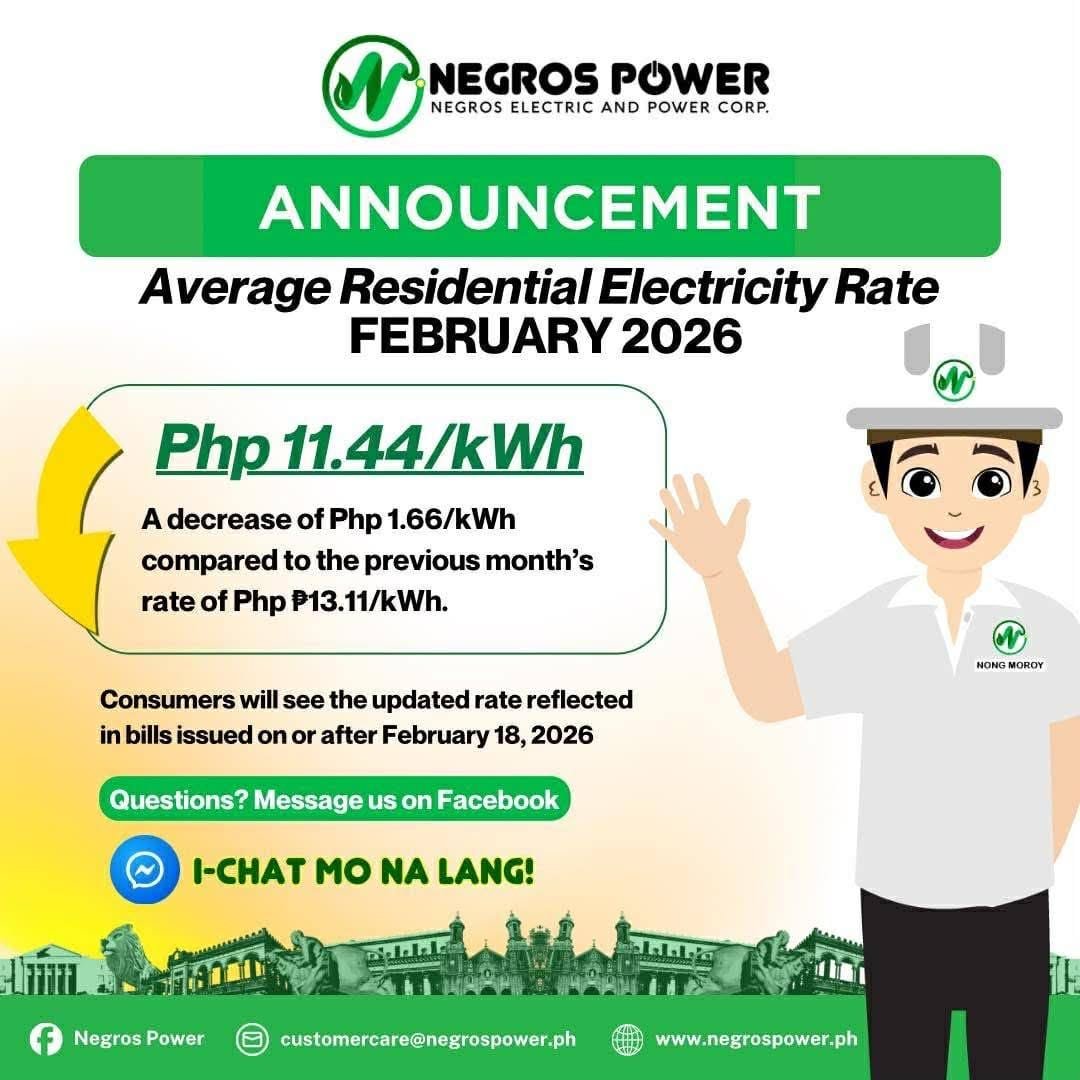
The good news and respite that all of us want to hear: lower electricity bill! Negros Power customers would surely be happy to know that there will be a substantial decrease in electricity rates this February 2026. The average residential rate dropped to ₱11.44 per kWh, down by ₱1.66 per kWh from January’s ₱13.10 per kWh. This is a significant reduction that will be reflected in consumers’ February billing.
Consumers with an average monthly consumption of 200 kWh will save 322 pesos of their budget for February 2026.
The major driver of this decrease is the sharp drop in generation costs, particularly from the Wholesale Electricity Spot Market (WESM). WESM rates fell dramatically from ₱7.5031/kWh to ₱4.4872/kWh — a huge reduction of ₱3.0160/kWh — following the normalization and synchronization of power plants in the Visayas Grid, which improved supply conditions and lowered market prices.
In addition, the rate from Green Core Geothermal Inc. (GCGI) decreased by ₱0.3136/kWh due to the implementation of its new 2026 base rate.
Combined, these adjustments resulted in a ₱1.4199 per kWh reduction in the overall generation charge, which more than offset minor increases in transmission and other pass-through charges.
While there was a slight increase in the NGCP transmission charge and the Universal Charge for Missionary Electrification (UCME), their impact was minimal compared to the substantial drop in generation costs.
Other February 2026 average rates are as follows:
- Low Voltage (LV): ₱11.50/kWh
- High Voltage (HV): ₱10.41/kWh
Passing Down the Benefits to Consumers
One advantage of Negros Power is that it is actively involved in energy trading to secure more competitive electricity rates. Any savings it achieves from better power purchases trickles down to consumers through more stable and potentially lower costs. This proactive approach shows an effort not only to keep the lights on but also to help manage expenses for households and businesses.