Power Restoration Process After a Typhoon
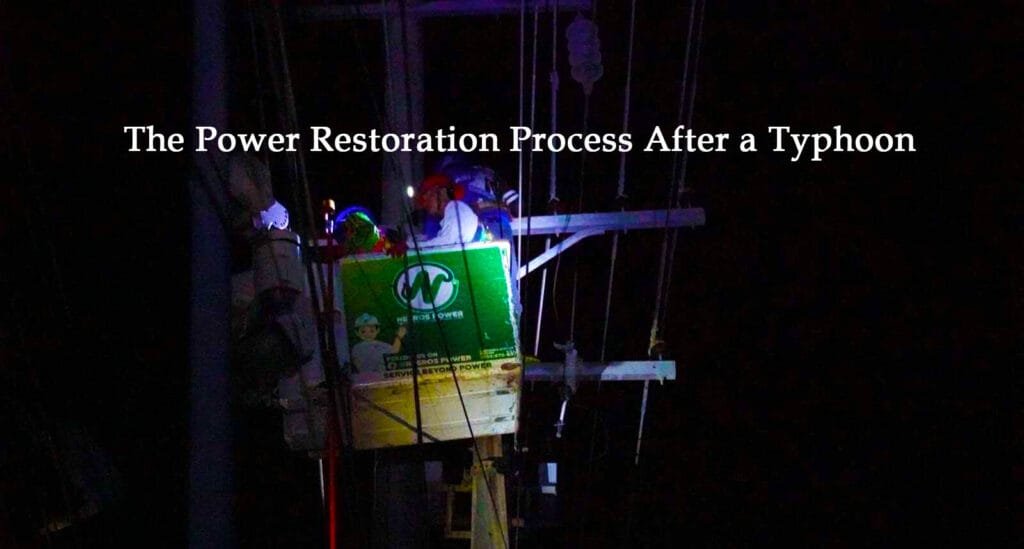
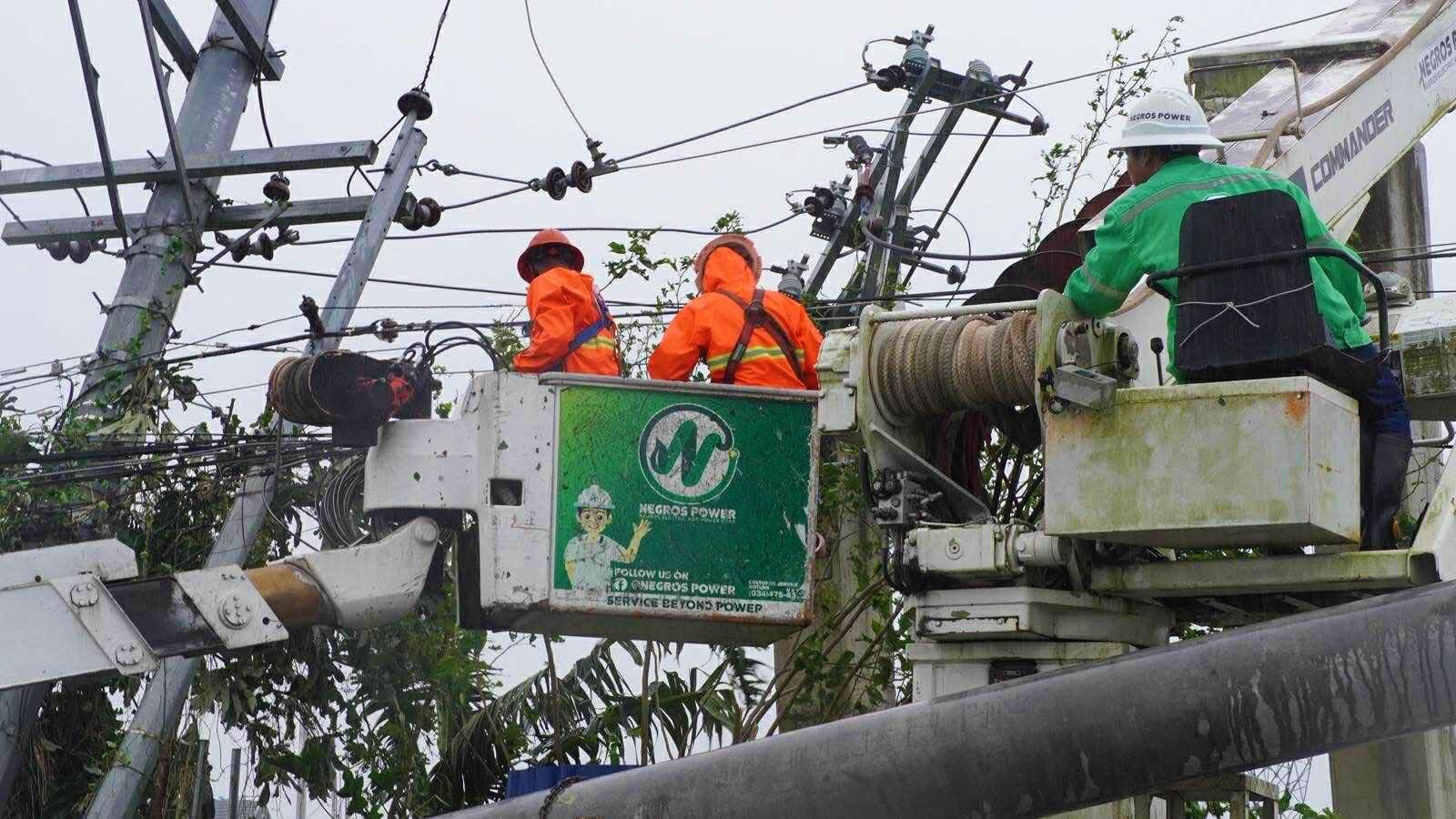
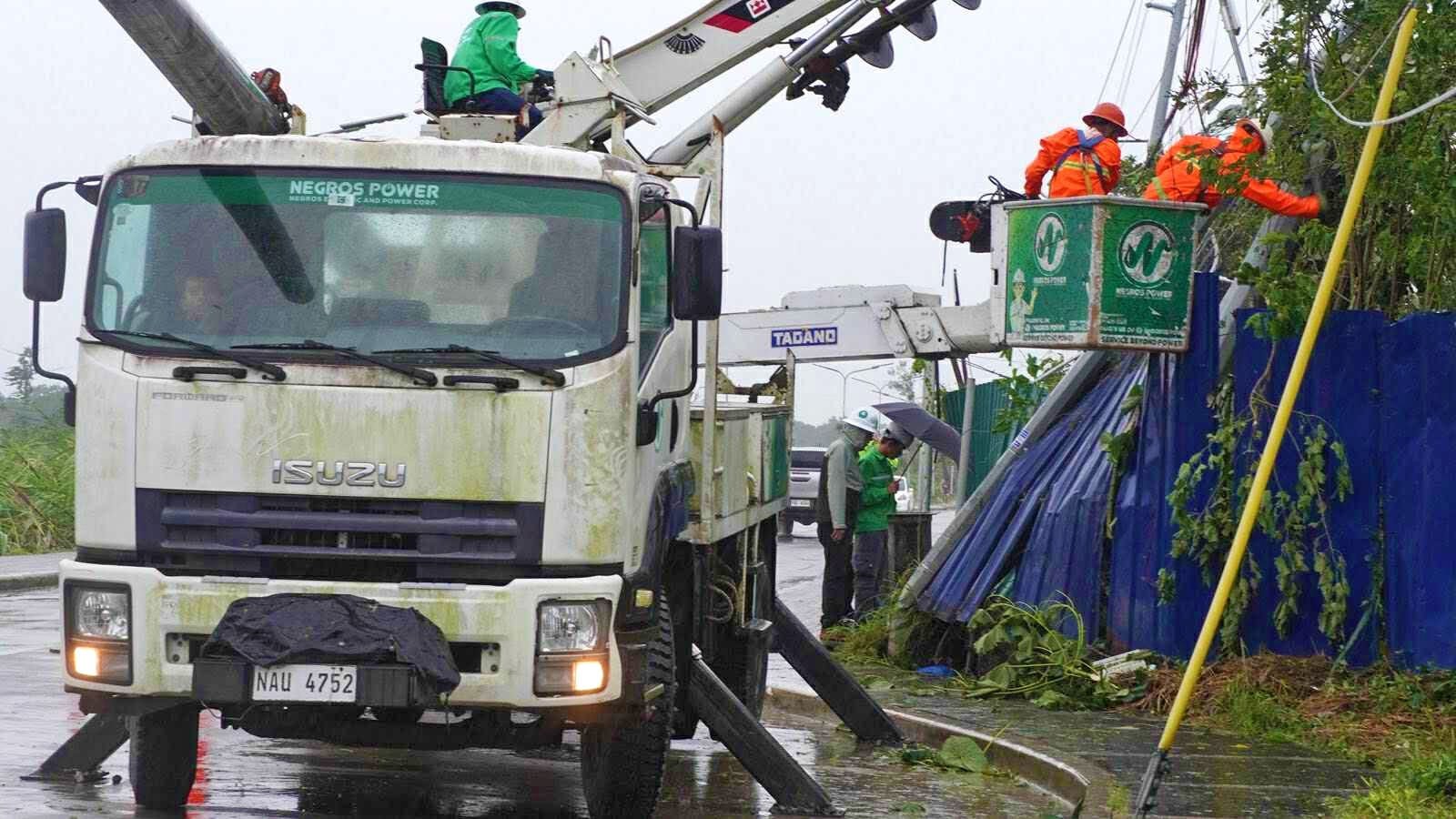
While on the wake of the devastation brought by Typhoon Tino to Negros Island, the Negros Power and Electric Corporation (NEPC) continues to work 24/7 to achieve 100% power restoration.
At this point, the company released a guideline regarding the power restoration process after a typhoon.
Read: Negros Power Working 24/5 for Full Power Restoration
What is the Power Restoration Process?
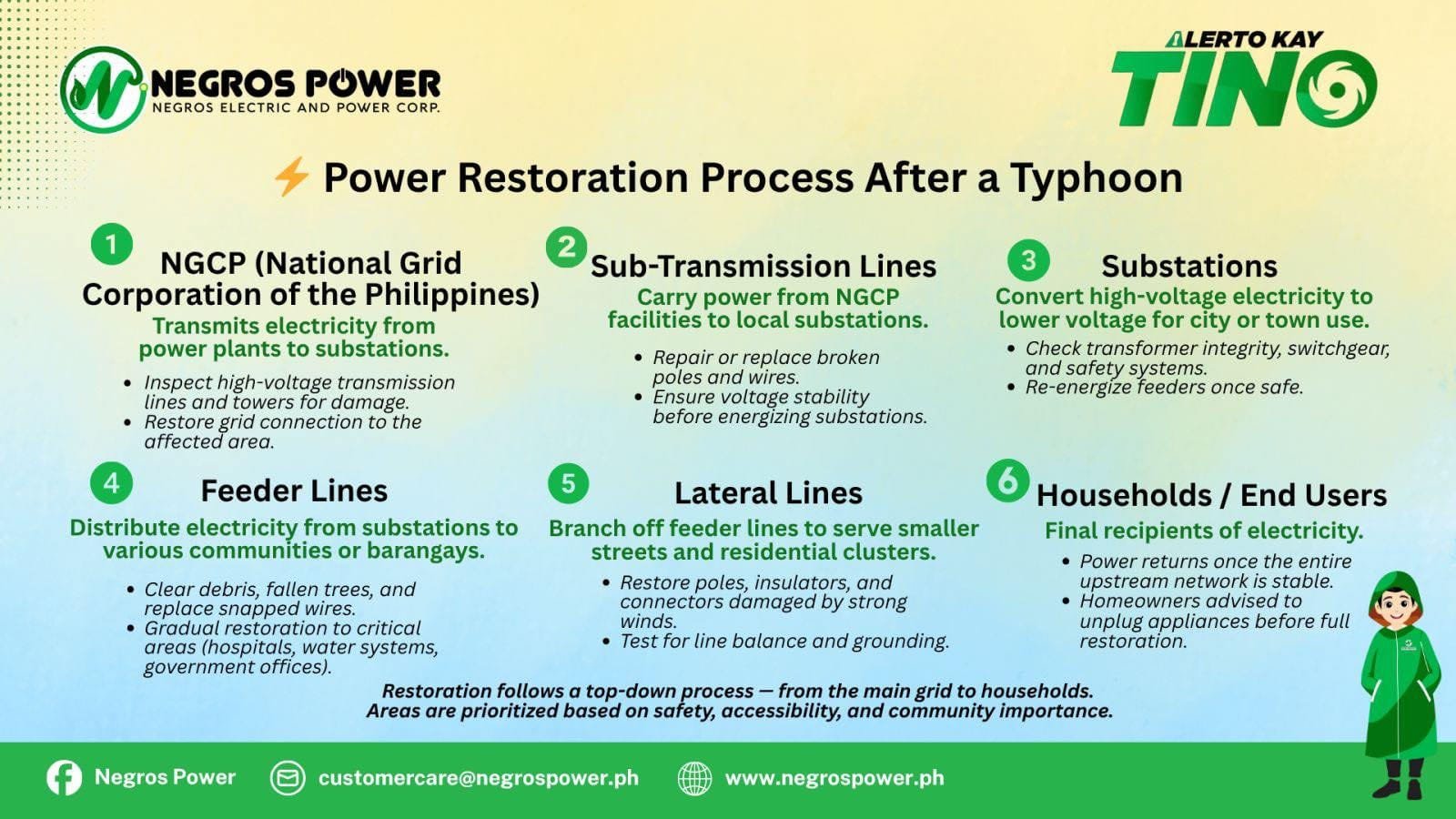
Power restoration follows a top-down process, from the main grid to individual households. Areas are prioritized based on safety, accessibility, and community importance. A distribution utility handles a very sophisticated system. Any mistake can lead to fatalities for both the crew and consumers. They cannot just switch on the system at any time.
Here is the process of power restoration, as explained by Negros Power:
1. NGCP
The National Grid Corporation of the Philippines, or NGCP, transmits electricity from power plants to substations. The distribution utility, in this case, Negros Power for Central Negros, inspects high-voltage transmission lines and towers for damage. After thorough checking that everything is in place, they can restore the grid connection to the affected area.
2. Sub-Transmission Lines
The sub-transmission lines carry power from NGCP facilities to local substations. However, Negros Power should repair or replace broken poles and wires, as well as ensure voltage stability before energizing substations.
3. Substations
Meanwhile, the substations convert high-voltage electricity to lower voltage for city or town use. The linemen have to check transformer integrity, switchgear, and safety systems. Once it is safe, the DU can now re-energize feeders.
4. Feeder Lines
The Feeder Lines distribute electricity from substations to various communities and barangays. It is the DU’s responsibility to clear debris, fallen trees, and replace snapped wires. It also ensures gradual restoration to crucial areas, i.e., hospitals, water systems, and government offices.
5. Lateral Lines
These branch off feeder lines to serve smaller streets and residential clusters. Linemen have to restore poles, insulators, and connectors damaged by strong winds. They also test for line balance and grounding, all for safety.
6. Households / End Users
The consumers (households and businesses) are the final recipients of electricity. Once the entire upstream network is stable, power will return. For safety, homeowners are advised to unplug appliances before a full restoration.